
Everyone's had a bad Aperol Spritz. Not bad because it's the wrong drink — bad because someone made it badly. The prosecco was flat. The pour was off. The Aperol was the cheap stuff grabbed from the back of the shelf three summers ago.
The frustrating part is that none of it was obvious until it landed in your hand. A spritz looks like a spritz. Orange, fizzy, ice, a slice of something. It's only when you taste it that you realise the version in front of you is nothing like the one you had in Venice, or that garden in Tuscany, or that one bar that seemed to get it effortlessly right every single time.
That inconsistency is baked into the recipe.
Why the classic spritz is harder than it looks
The Aperol Spritz formula — three parts prosecco, two parts Aperol, one part soda — sounds simple. In practice, it isn't. Three different ingredients means three variables. The prosecco matters enormously: a flat bottle, a cheap bottle, or the wrong style will throw the whole drink off.
And then there's the prosecco problem nobody talks about: once you open a bottle, you're committed to finishing it — or watching it go flat in the fridge over the next two days. It's a recipe designed for bars with professional bartenders and consistent stock. It was never really designed for your kitchen.
The brief
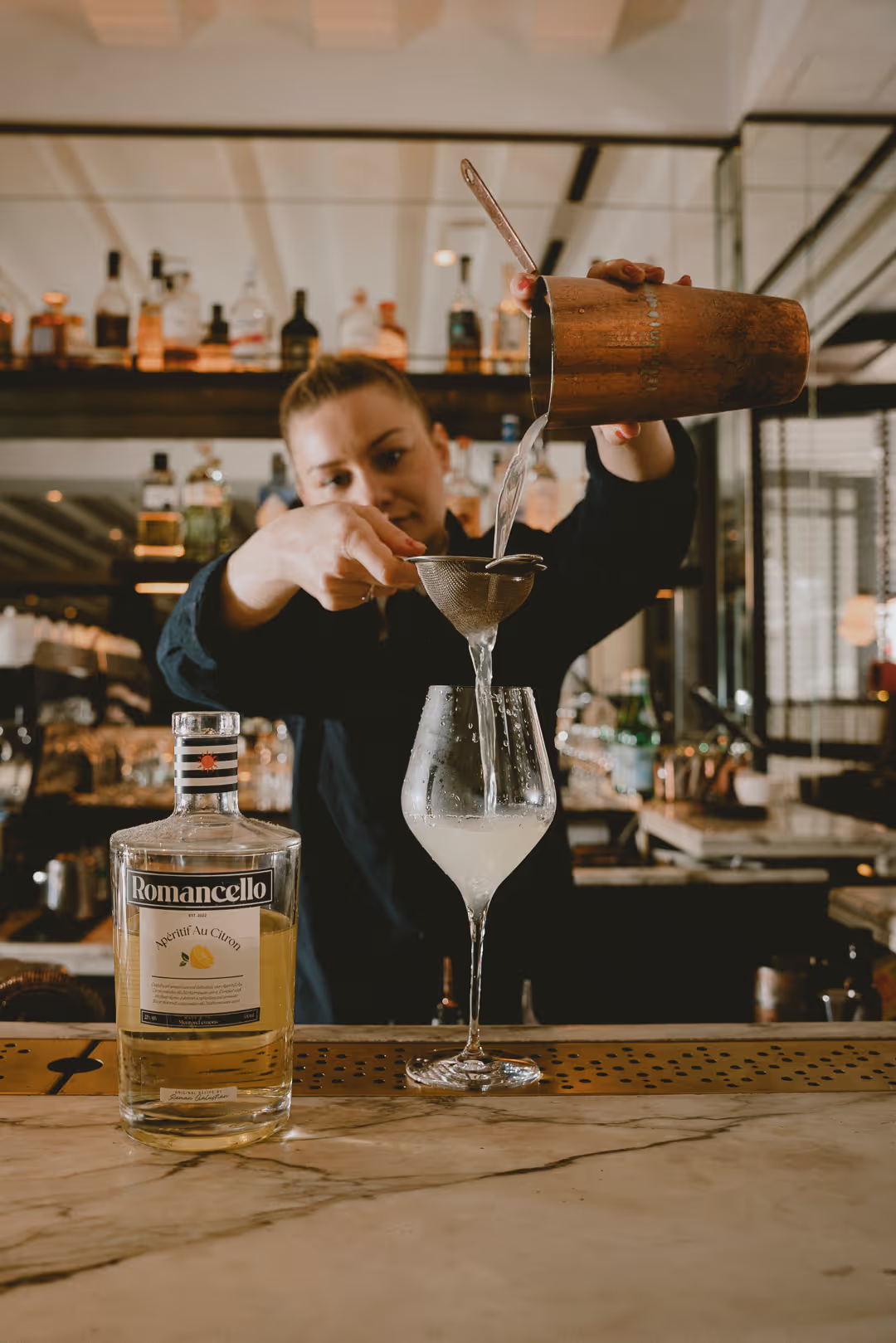
When developing Romancello, this frustration was the starting point. Too many bad spritzes, all with the same root cause: complexity. Too many ingredients, too much room for variability, too much that could quietly go wrong between the bottle and the glass.
"I wanted the Romancello Spritz to be of the same standard whether you make it at home, at a barbecue, or anywhere else."
So we set a constraint early on. The Romancello Spritz had to work with two ingredients. Just two. And it had to be equal parts. That wasn't a shortcut — it was a design decision. We built Romancello specifically around this idea: the sweetness, the ABV, the balance of lemon and botanicals, so that when you combine it with soda water, you get something that tastes finished. Complete.
Which means you always will.
50ml Romancello · 50ml soda · Ice · Done.
Romancello Spritz
Serves 1 · 2 minutes · 2 ingredients
Ingredients
- 50ml Romancello
- 50ml soda water
- Ice cubes
- Lemon wheel to garnish
Method
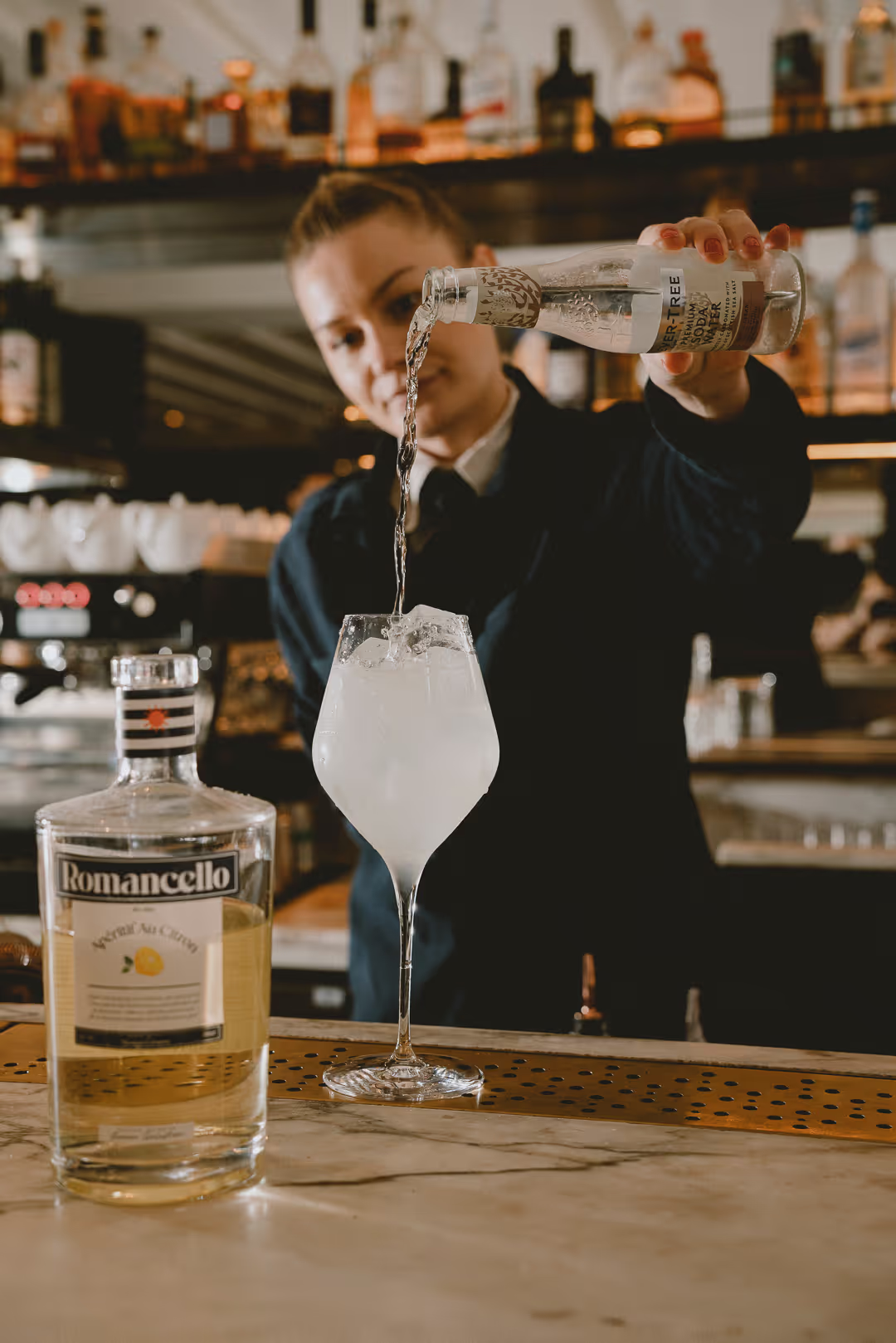
- Fill a wine glass or highball with ice.
- Pour in 50ml of Romancello.
- Top with 50ml of soda water.
- Stir gently once or twice.
- Garnish with a lemon wheel.
Why it tastes the way it does
The drink works because of what Romancello is made from. We use IGP Menton lemons — a Protected Geographical Indication variety grown on the terraced hillsides above Menton, on the French Riviera. More fragrant, more complex, with a brightness that comes through in the liquid without needing sugar to prop it up.
The result is a spritz that's dry enough to be genuinely refreshing, with enough body to feel like a proper drink. The soda lifts it. The ice settles it. You don't need anything else. No prosecco to open. No leftover bottle going flat. Just pour, top, drink.
When to make it
The honest answer: whenever. It's a five-minute drink that works at a summer barbecue, a quiet evening on the terrace, or whenever someone arrives and you want to offer them something that feels considered without requiring you to become a bartender.
It's also the answer to the question you'll get when you serve it: what is this? Which, if you're introducing someone to Romancello for the first time, is exactly the right question.