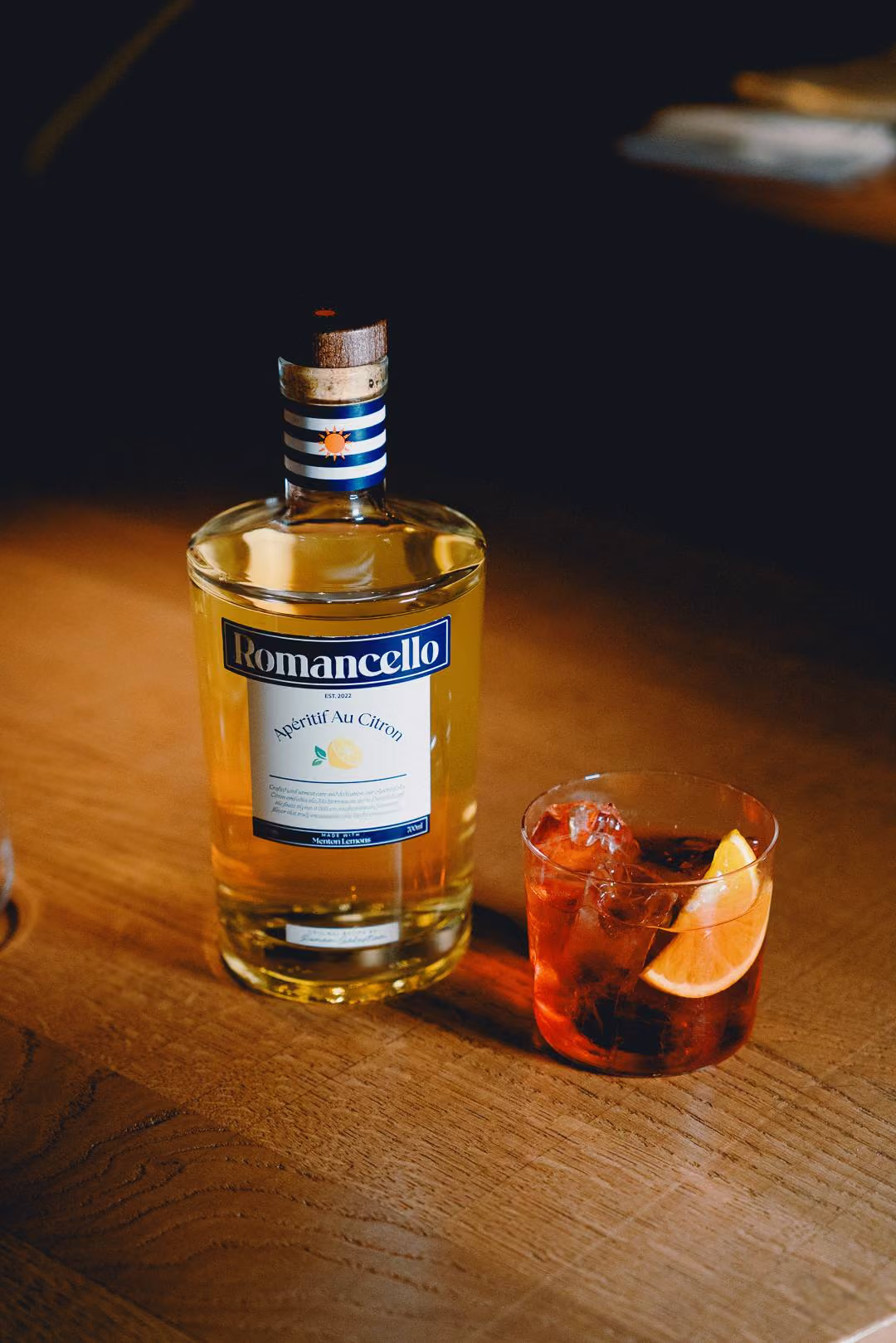
The Negroni does not apologise for itself. It arrives on the rocks, deep red, properly stirred, wearing an orange peel like a ribbon on a gift it already knows you'll like. It's been ordered, imitated and slightly mythologised for over a century. The recipe hasn't changed much — until now, slightly.
We swapped the gin for Romancello. What follows is both an explanation of why that works, and a case that it might work better.
Florence, 1919
The story begins in a café. Count Camillo Negroni — Italian nobleman, rumoured cowboy, confirmed drinker — walked into Caffè Casoni in Florence and asked his regular bartender, Fosco Scarselli, to strengthen his Americano. The Americano was already a fine thing: Campari, sweet vermouth, a splash of soda. Negroni wanted the soda gone and something with backbone in its place. Scarselli reached for the gin. He swapped the lemon garnish for orange peel, and pushed the glass across the bar.
That was it. No grand announcement, no menu debut. A nobleman's impatience and a bartender's instinct produced one of the most enduring cocktails ever made. The Negroni has survived two world wars, the rise of vodka, the craft cocktail era, and a thousand inferior variations. It remains, a century later, one of the most ordered drinks on the planet.
The equal parts formula — one third each of spirit, bitter liqueur and sweet vermouth — is part of what makes it so good. It's balanced by design. Nothing dominates. Everything contributes. When you swap one ingredient, you don't break the Negroni. You redirect it.
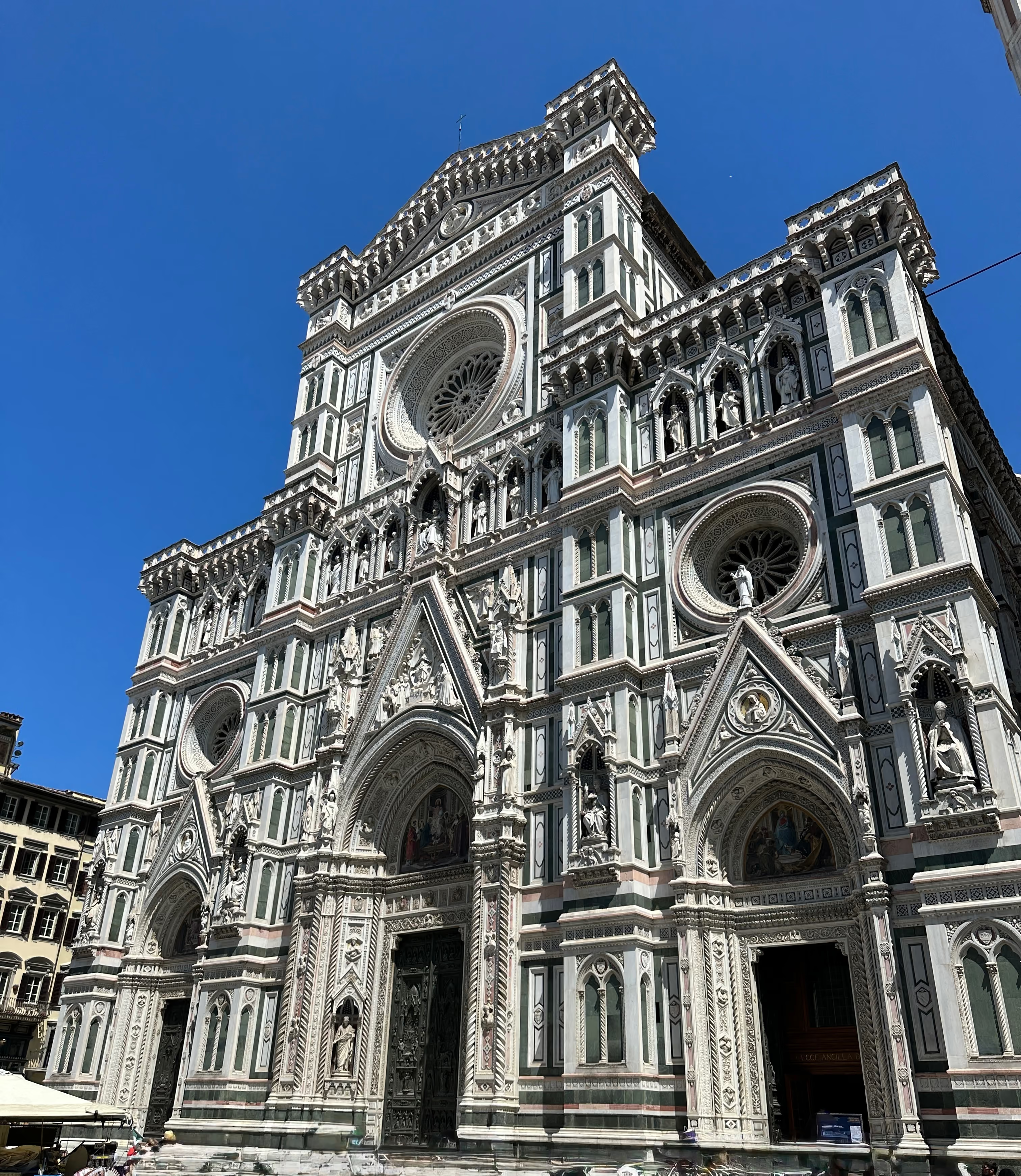
Florence — where the Negroni was born, 1919.
What Romancello changes
The classic Negroni depends on gin for its backbone. Gin is dry, botanical, and high in alcohol — juniper-forward, often with citrus peel, coriander, angelica. It gives the drink its weight and its edge. It's also what can make a pre-dinner Negroni feel like it's replaced dinner rather than preceded it.
Romancello replaces the gin. Instead of juniper, you get the citrus character of IGP Menton lemon — bright, dry, fractionally floral. Romancello is an apéritif, not a spirit, so the alcohol drops considerably. The drink becomes lighter in the hand without losing its structure. The bitterness of Campari and the lemon character of Romancello turn out to be natural counterparts: they push against each other in exactly the right way, the way bitter orange and bitters push against each other in the classic. The sweet vermouth does what it always did — rounds the edges, adds depth.
The result is unmistakably a Negroni. The colour, the ritual, the ice, the peel — all present. What changes is the intention. A gin Negroni is a cocktail. A Romancello Negroni is an aperitif. The difference matters most when you sit down to dinner and realise you still have an appetite.
The Negroni's genius is in equal parts. Romancello keeps that. What changes is the intention — a drink built for before, not instead of.
How it's made.
The aperitif question
There's a version of the Negroni that works best at 11pm in a bar you discovered by accident. That version needs the gin. It needs the weight and the ABV and the slight sense of consequence. We are not trying to improve that version.
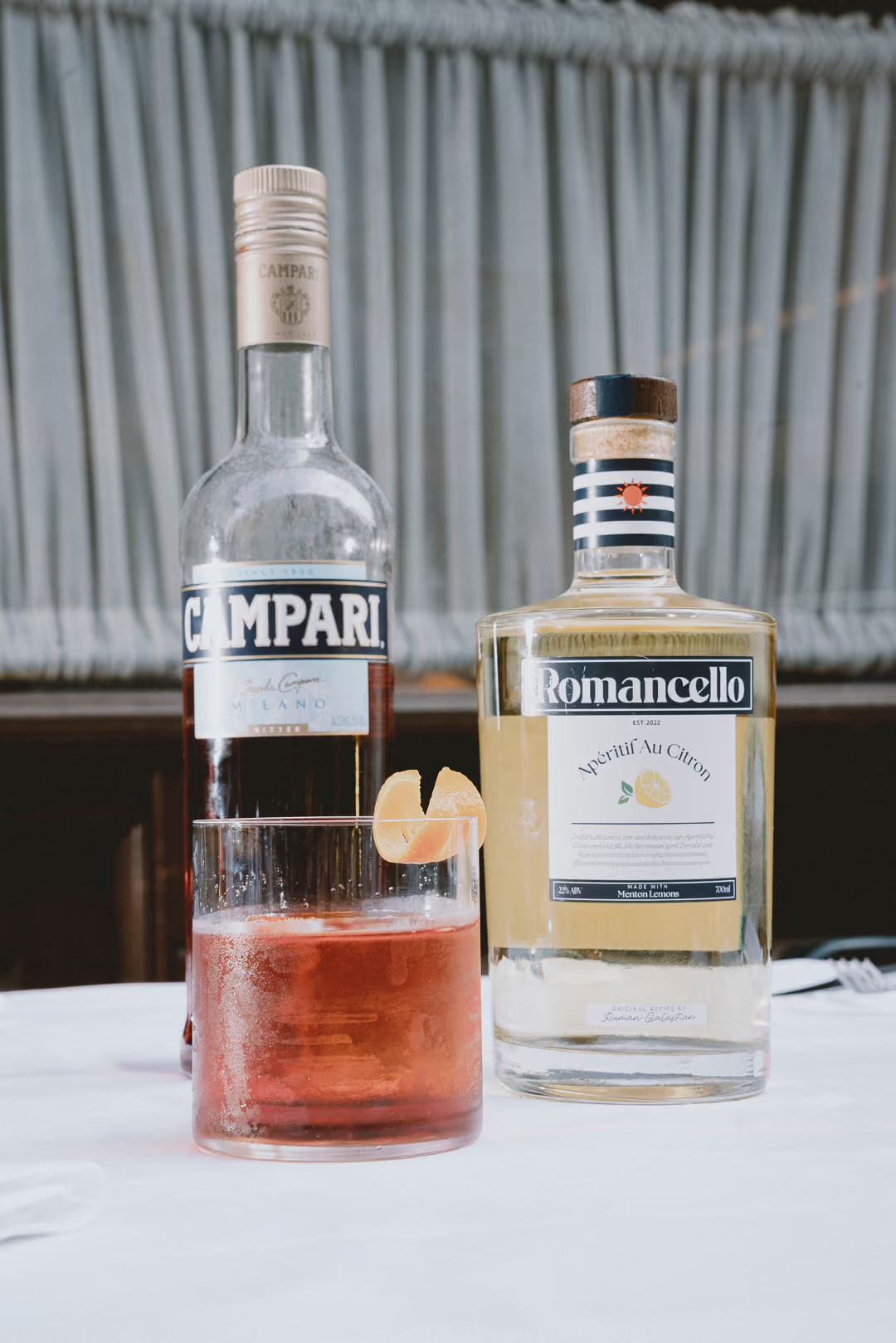
The Romancello Negroni is a different drink for a different moment. It's the drink you want at 6:30pm when people are arriving, when the table is being set, when you want to be holding something beautiful and red and stirred — without arriving at dinner already somewhere else. It is, in the truest sense, what an aperitif is supposed to be: something that opens the appetite rather than satisfying it.
Negroni culture is built on ritual. The stirring, the ice, the peel, the silence before the first sip. None of that changes. The glass is the same. The colour is the same. What changes is what happens after.
The Romancello Negroni is one of four serves we've built around the bottle. See the Spritz, On The Rocks and Martini alongside it. View all Perfect Serves →