The best cooking ingredients are almost always things you'd happily drink. Lemon juice. A glass of wine reduced into a sauce. Vermouth stirred into a risotto. There's a logic to it: flavour good enough to sip tends to be good enough to cook with. Romancello, it turns out, is no exception.
Sofia is an Italian cook and food creator — @in_cucinacon_sofia on Instagram — who grew up baking plumcake from the recipes printed on the back of Paneangeli lievito sachets. Her mamma used them. She brought a pack back from Italy on her last visit. The sachet recipes are where her curiosity for baking started, and she still looks on the back of them to this day.
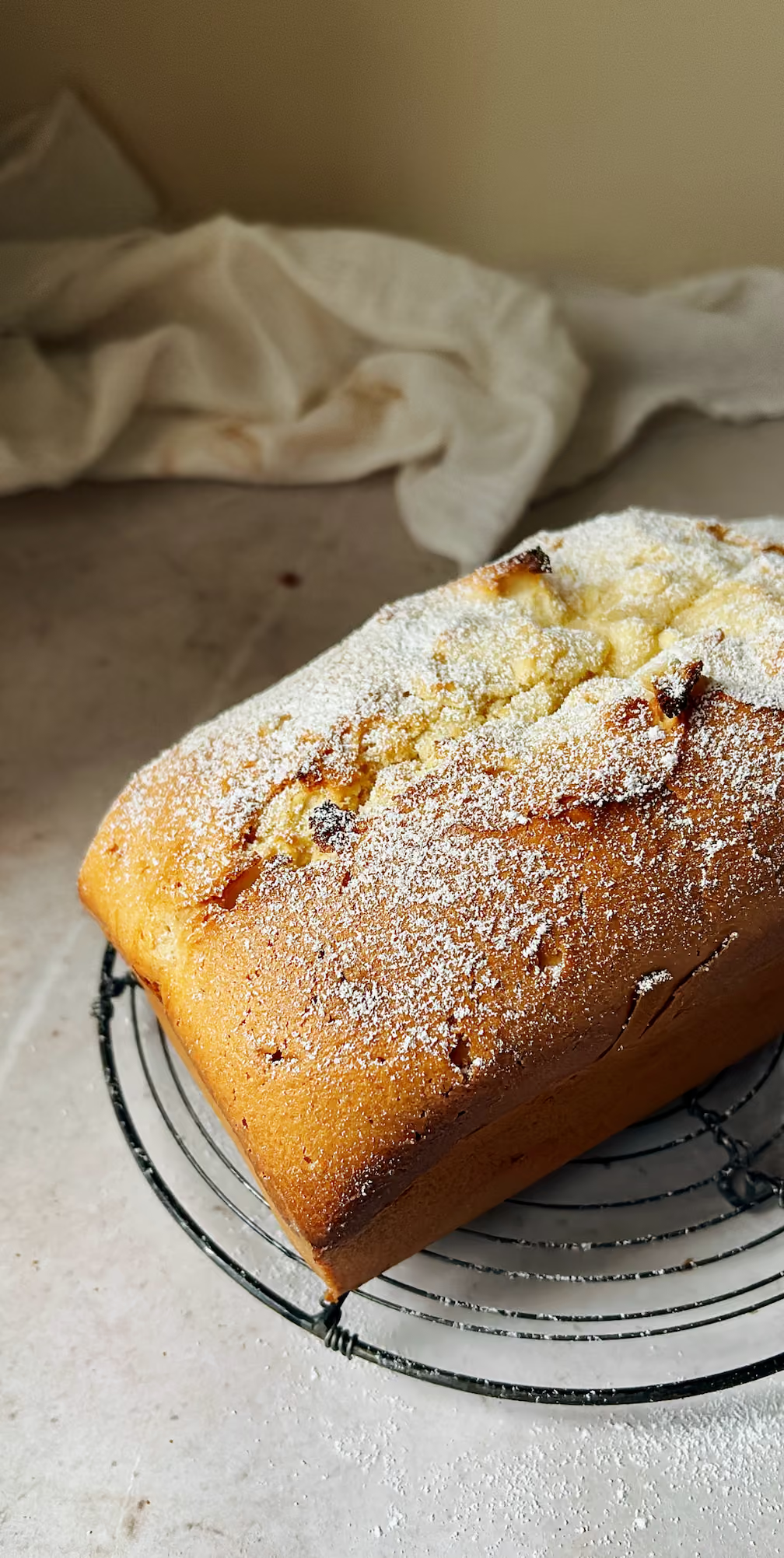
In a recent reel, she took that same plumcake — a classic Italian loaf cake, nothing like the English version — and turned it into something worth lingering over. The difference was a Romancello syrup, poured over the still-warm cake and left to absorb. Simple. Obvious, once you've seen it. The kind of thing you can't unsee.
The syrup — and how to make it
For a standard 2lb plumcake, the syrup comes together in a saucepan: 150g of caster sugar, 75g of lemon juice, 75g of water. Bring to a gentle simmer until the sugar dissolves completely, then set it aside to cool. Here's the important part: add the Romancello only once the mixture has dropped to 40°C. Heat drives off alcohol — and with it, the aromatic top notes that make Romancello what it is. Let it cool first, then add.
How much Romancello? Sofia says "to taste." That's the right answer. The syrup should be sharp and citrusy, not sweet. A few tablespoons will get you there. More if you want the lemon to carry through to the second day.
Romancello Syrup
For a 2lb plumcake · by @in_cucinacon_sofia
Ingredients
- 150g caster sugar
- 75g fresh lemon juice
- 75g water
- Romancello to taste
Method
- Combine sugar, lemon juice and water in a small saucepan over medium heat.
- Stir until the sugar dissolves. Do not boil.
- Remove from heat and leave to cool to 40°C.
- Add Romancello to taste. Stir gently.
- Pour over the warm cake and leave to absorb before slicing.
Add the Romancello only once the syrup has cooled to 40°C. Heat drives off the notes that matter.
Why Romancello and not ordinary limoncello
Standard limoncello is sweet — designed to be drunk cold, often after dinner, as a digestif. That sweetness works in the glass but can tip a syrup into something slightly cloying. Romancello sits differently. It's an apéritif, not a digestif: drier, less syrupy, made with IGP Menton lemons that carry more floral zest and less of the sugary softness you find elsewhere.
In a cooking syrup, that dryness is an asset. The lemon comes through cleanly — bright, sharp, a little floral — without competing with the sweetness you've already built into the cake. The result is a slice that tastes finished rather than dressed.
What else it works in
The plumcake is the natural starting point. But once you've seen what the syrup does, other uses become obvious. A spoonful stirred through mascarpone for a tiramisu that doesn't need any additional lemon. Panna cotta with a small pour over the top at the table. A lemon trifle in summer. A drizzle over vanilla ice cream when you want to close a dinner quickly and well.
The principle is the same in each case: a dry lemon apéritif behaves in the kitchen the way a dry vermouth does — it adds flavour without pushing everything else aside.
Sofia's plumcake reel — @in_cucinacon_sofia
Sofia's reel ends with the syrup being poured. The cake absorbs it — you can almost see it happening in real time. A good syrup doesn't sit on top of what it's touching. It becomes part of it. The Menton lemon, whether in the glass or in the bowl, doesn't announce itself. It reveals itself — gradually, through the finish.
Romancello Apéritif Au Citron is made with IGP Menton lemons and available on Amazon UK. One bottle covers a lot of ground — from the glass to the kitchen and back again.